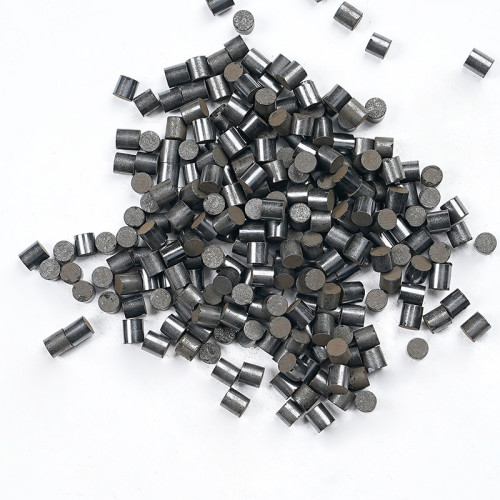
How to Select a ZnO Desulfurization Adsorbent
Select a zinc oxide desulfurization adsorbent by matching the sulfur species and load, operating conditions, outlet sulfur requirement and vessel design. ZnO content or price per tonne alone is not enough to establish the best product for an installed bed.
In purchasing enquiries, these products are sometimes called ZnO desulfurization catalysts. For hydrogen sulfide removal, zinc oxide acts as a reactive sulfur sorbent: it captures sulfur while being converted to zinc sulfide. This guide explains the information to collect and how to compare supplier proposals for gas purification.
1. Confirm What Sulfur the Bed Must Remove
The basic hydrogen sulfide capture reaction is:
ZnO + H₂S → ZnS + H₂O
An inlet sulfur report should distinguish H₂S from COS, mercaptans and other organic sulfur compounds where relevant. A total-sulfur result alone may not establish whether upstream conversion or another purification step is needed.
For a conventional purification arrangement, organic sulfur may first be converted to H₂S in an upstream hydrogenation stage before removal in the ZnO bed. Some promoted or multifunctional products have additional capabilities, but those capabilities must be confirmed for the actual sulfur species, feed and operating conditions.
Johnson Matthey's purification technical guide describes the distinction between feed hydrogenation, chloride removal and ZnO-based H₂S capture. The process review should establish the duty of each bed rather than assuming that any ZnO grade removes every sulfur compound directly.
2. Define the Inlet and Outlet Requirements on the Same Basis
For the inlet gas, provide the normal composition and known variations. Include sulfur peaks or upset records if available. State whether concentrations are reported as the individual compound or as sulfur, and identify the units and dry- or wet-gas basis.
For the outlet, identify what the downstream equipment requires:
- Is the limit for H₂S, total sulfur or specified sulfur compounds?
- What are the units and analytical method?
- At which sampling point does the limit apply?
- What criterion defines sulfur breakthrough or the end of the usable bed cycle?
The same numerical concentration can represent different duties when the reporting basis changes. Agree these definitions before comparing an outlet guarantee or an adsorbent capacity figure.
3. Match the Grade to Temperature, Pressure and Gas Composition
Provide the actual inlet temperature and its normal range, relevant temperature measurements, pressure and whether pressure is absolute or gauge. Identify startup, low-load or other conditions that form part of the required duty.
Include the gas composition, flow, moisture or steam content and any known contaminants relevant to the existing purification system. Confirm the flow reference conditions and whether the quoted flow is dry or wet. Chloride species and other contaminants should be reviewed separately where present.
Product selection is condition-dependent. For example, Topsoe's purification product range distinguishes ZnO-based products for different sulfur concentrations and temperature duties. This illustrates why an operating range published for one grade should not be treated as a universal range for all ZnO adsorbents.
4. Compare Usable Sulfur Capacity, Not ZnO Percentage Alone
ZnO content is useful formulation information, but theoretical capacity is not the same as sulfur captured before the required breakthrough limit is reached. Practical performance depends on the formulation, pore structure, particle size, operating conditions and how the reaction zone progresses through the bed.
Ask the supplier to explain the capacity used in its proposal:
- Capacity definition: sulfur uptake at saturation or at a specified breakthrough endpoint.
- Quantity basis: sulfur per mass of fresh adsorbent or per installed bed volume.
- Test conditions: feed composition, temperature, flow or space velocity and outlet criterion.
- Design basis: usable bed inventory and the assumptions used to assess the required duty.
Avoid comparing capacity values with different endpoints or units as though they were equivalent. A higher ZnO percentage or bulk density does not, by itself, demonstrate better performance in a particular vessel.
5. Check Particle Size, Pressure Drop and Bed Arrangement
The physical specification must suit the installed vessel. Provide the vessel dimensions or drawing, available bed depth, current loading quantity, support arrangement, allowable pressure drop and any known problems such as dust carryover or uneven loading.
Ask how the proposed size and shape relate to gas distribution, pressure drop and sulfur-removal performance. Where crush strength or attrition data are supplied, confirm the test method and units so that offers can be compared fairly.
Identify whether the plant has a single bed, parallel vessels or a lead–lag arrangement. Bed configuration and sampling arrangements affect how breakthrough is monitored and how the available sulfur capacity can be used. Request a recommendation for the existing system rather than changing the operating arrangement on the basis of a general article.
6. What Information Is Needed to Estimate a Replacement Interval?
A useful estimate requires the sulfur load over time, usable adsorbent inventory, agreed capacity basis and outlet breakthrough criterion. Average inlet concentration alone may miss the effect of variable feed or short sulfur excursions.
Provide the previous charge date, inlet and outlet sulfur records, gas-flow history, relevant temperature and pressure data, and any analysis of the removed material. Explain whether the enquiry concerns a routine replacement, early breakthrough, capacity expansion or a changed feed.
Ask the supplier to state the assumptions and limitations of its estimate. Keep a calculated service period, a historical operating record and a contractual guarantee separate. A standard lifetime should not be assigned to every ZnO installation.
7. Supplier Comparison Checklist
| Item | What to align between offers |
|---|---|
| Treatment duty | Sulfur species, normal load, peaks and downstream requirement |
| Capacity | Units, test conditions and breakthrough endpoint |
| Physical specification | Size, shape, bulk density, strength method and loading quantity |
| Vessel suitability | Bed dimensions, supports, allowable pressure drop and arrangement |
| Supply scope | Quantity unit, packing, delivery basis and required documents |
| Technical scope | Grade data sheet, SDS, handling/loading guidance and assessment assumptions |
Confirm whether the loading requirement is expressed as mass or volume. If a supplier converts between them, request the bulk-density basis. Compare packing and technical-service requirements explicitly so that the quotation covers the intended replacement scope.
8. Preparing an Enquiry for SYAMCAT XT317/XT318
For SYAMCAT XT317/XT318 ZnO desulfurization products, send the following information as a practical starting package:
- Existing product grade, latest specification and current loading quantity with its unit.
- Gas composition and sulfur analysis, including species, concentration basis, normal load and known peaks.
- Inlet temperature, operating pressure and flow with reference conditions.
- Required outlet H₂S or total-sulfur limit, sampling point and breakthrough criterion.
- Vessel drawing or dimensions, bed arrangement and allowable pressure drop.
- Current operating history, reason for replacement, required delivery date and document requirements.
Request the current grade-specific technical data sheet and confirm which product is appropriate for the duty. If organic sulfur is present, clarify the treatment required and whether upstream hydrogenation is available. Do not infer identical capabilities for XT317 and XT318 from their shared product-family name.
9. Frequently Asked Questions
Is the highest-ZnO-content product always the best choice?
No. Evaluate usable sulfur capacity before the defined breakthrough limit, the physical specification, pressure drop and the actual operating conditions. Composition is one part of that assessment.
Can a ZnO bed remove organic sulfur without an upstream catalyst?
That depends on the sulfur species, grade and process conditions. Conventional H₂S capture and organic-sulfur conversion are different duties. Confirm any multifunctional claim against the proposed feed and the supplier's grade-specific documentation.
Can I obtain an initial proposal without complete operating records?
Yes, you can submit the existing specification, available gas analysis, quantity and delivery requirement first. Identify missing fields. The supplier can then define the information needed to progress from a preliminary response to a technically supported selection.
Prepare Your ZnO Adsorbent Enquiry
Start with the current grade, inlet sulfur analysis, operating conditions, outlet target and loading requirement. These details allow the supplier to assess the removal duty and identify missing information before making a grade or replacement recommendation.