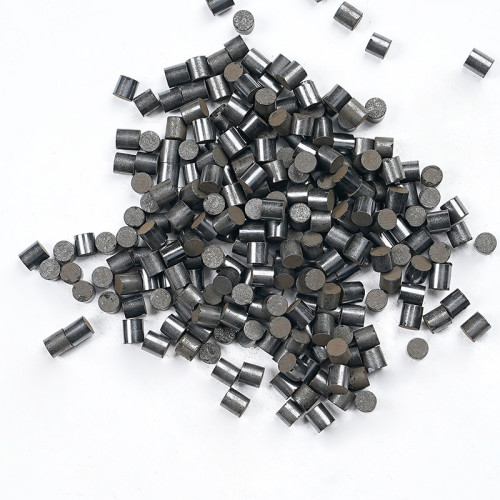
Fe-Mo vs Silver Catalysts for Formaldehyde Production
Choosing between iron–molybdenum oxide and silver catalysts for formaldehyde production starts with the plant's process route and reactor design. Both routes use methanol as a feedstock, but the catalyst, reaction system, heat management and downstream treatment must work together. A catalyst purchase should therefore begin with the existing plant configuration and product requirements, rather than a claim that one catalyst is universally better.
This guide explains what to compare, what an existing plant can change, and which information to prepare for a supplier review.
1. What Is the Main Difference Between Fe-Mo and Silver Catalysts?
Iron–molybdenum oxide catalysts are used for the selective oxidation of methanol to formaldehyde. The overall oxidation reaction can be written as:
CH₃OH + ½O₂ → HCHO + H₂O
Silver-process formaldehyde production involves methanol oxidation and dehydrogenation. The dehydrogenation reaction can be written as:
CH₃OH → HCHO + H₂
These equations describe reaction pathways; they are not feed specifications or operating instructions. The actual balance of reactions, allowable feed mixture and operating conditions depend on the licensed process and plant design.
Engineering companies distinguish silver-catalyst and metal-oxide-catalyst plants as different process routes. For example, Pörner's formaldehyde technology overview describes both routes and their respective process arrangements. The comparison should therefore cover the complete process, as well as the catalyst itself.
2. Fe-Mo and Silver: A Practical Comparison
| Comparison point | Fe-Mo oxide route | Silver route |
|---|---|---|
| Catalyst family | Iron–molybdenum oxide formulation | Silver catalyst |
| Reaction focus | Selective methanol oxidation | Methanol oxidation and dehydrogenation |
| Reactor review | Reactor geometry, heat removal and catalyst loading | Reactor geometry, catalyst-bed arrangement and heat balance |
| Feed review | Methanol concentration, air supply and recycle arrangement | Methanol preparation, air supply and any water or recycle streams |
| Product review | Formaldehyde concentration, residual methanol and other quality targets | The same product targets, assessed against the silver-process flowsheet |
| Procurement basis | Approved grade, physical specification and loading plan | Approved silver specification, particle distribution and loading plan |
Neither column is a substitute for a process design package. In particular, a published temperature or performance value from one plant should not be transferred to another catalyst grade or reactor without verification.
3. Can an Existing Plant Switch from Silver to Fe-Mo?
Do not treat a change between these routes as a routine catalyst substitution. A proposed conversion requires an engineering assessment of the reactor, feed preparation, heat recovery, absorption system, off-gas treatment, controls and applicable safety requirements.
For an operating plant, first identify the existing process licensor or technology, reactor configuration and currently approved catalyst specification. Then separate two different decisions:
- Replacement within the existing route: evaluate a suitable catalyst grade or specification for the current equipment and operating envelope.
- Conversion to another process route: obtain a process and equipment assessment before comparing catalyst supply offers.
A lower catalyst purchase price alone does not establish that a process conversion is feasible or economical. Likewise, a supplier's experience with one catalyst family does not establish that it can be loaded into the other route's reactor.
4. Which Performance and Cost Figures Should You Compare?
Methanol conversion, selectivity and yield
Ask suppliers to define each reported metric and its calculation basis. Methanol conversion, formaldehyde selectivity and formaldehyde yield describe different aspects of performance. A high conversion figure on its own does not describe how much saleable product the plant produces.
For any comparison, align feed composition, reactor conditions, sampling location, operating stage and treatment of recovered or recycled methanol. Where the evidence is a laboratory or single-tube evaluation, retain that scope when describing the result.
Product specification
Provide the required formaldehyde concentration, allowable residual methanol and any other customer specification. Include the intended downstream use where it affects the specification. Product quality should be assessed for the whole production and absorption system, not attributed to the catalyst alone.
Utilities and heat recovery
Review the plant's actual utility balance, heat-recovery equipment and operating load. Avoid comparing energy figures with different system boundaries or crediting steam export in only one offer. Any savings estimate should identify the baseline and the equipment included.
Catalyst cost and replacement scope
Align loading quantity, quantity unit, packing, freight basis, technical support and the documents supplied. If recovery or recycling value is part of a silver-catalyst offer, ask for the commercial terms and the basis of that value rather than assuming a standard credit.
Compare the expected service period only where the supplier states the operating conditions, acceptance criterion and evidence supporting it. A projected period, an observed operating record and a contractual guarantee should be identified separately.
5. What Should You Send to a Catalyst Supplier?
Prepare the following information for a replacement or selection review:
- Existing process: silver or metal-oxide route, licensor or technology if known, and the purpose of the enquiry.
- Current catalyst: manufacturer, grade, available specification, particle size or size distribution, loading quantity and loading arrangement.
- Reactor information: dimensions or drawing, relevant internals, heat-management arrangement and pressure-drop constraints.
- Feed and operation: methanol specification, feed mixture, flow, operating load, relevant temperature measurements and pressure with its basis.
- Product targets: formaldehyde concentration, residual methanol and other applicable acceptance criteria.
- Operating history: start date, changes in conversion or product quality, pressure-drop trend and relevant inspection or test records.
- Supply requirements: quantity and unit, delivery destination and schedule, required documents and requested technical-service scope.
If some information is missing, submit the current specification or enquiry document first. Mark unknown fields clearly so the supplier can identify the remaining questions and the scope of an initial assessment.
6. How Does This Apply to SYAMCAT Products?
SYAMCAT lists JQ116, JQ216 and JQ316 Fe-Mo catalysts for formaldehyde production by methanol oxidation and JQY 101 silver catalyst for the silver-process route.
Use these product families as the starting point for a technical enquiry. Request the current grade-specific technical data sheet and confirm the physical specification, loading requirements and application limits for your plant. The presence of both families in the product range does not establish interchangeability or a universal ranking between them.
For a Fe-Mo enquiry, include the current grade and loading plan. For a silver-catalyst enquiry, include the existing particle-size distribution and required loading quantity. In both cases, provide the reactor and product information needed to assess suitability.
7. Frequently Asked Questions
Is Fe-Mo always better than silver for formaldehyde production?
No universal conclusion follows from the catalyst family alone. Review the process route, installed equipment, product targets, operating evidence and comparable cost boundaries before making a decision.
Can I compare offers using only catalyst price per kilogram?
Price per kilogram is only one part of the comparison. Align the required loading, physical specification, delivery and technical-service scope, and document any recovery terms or performance conditions.
Is the current catalyst grade enough to obtain a quotation?
It is a useful starting point. A technically meaningful offer may also require the current specification, reactor information, loading quantity, operating conditions and product targets. The supplier should identify any assumptions or missing information.
Prepare Your Formaldehyde Catalyst Enquiry
Send SYAMCAT your existing process route, current catalyst specification, loading requirement, reactor information and product targets. If you are considering a process conversion, identify that separately from a replacement purchase so that the necessary engineering review can be defined.
Contact SYAMCAT for a formaldehyde catalyst selection review.